Showing posts with label Kawasaki. Show all posts

Saturday, February 5, 2011


Modification Kawasaki Ninja 150 R to Yamaha R6
Jakarta - Yudha seem to want to make sure if the motor becomes the greatest.
Then, he modifies the favorite motorcycle Kawasaki Ninja 150 R dropout 2008 became his Yamaha R6.

Modification Kawasaki Ninja 150 R to Yamaha R6
For his project, Yudha who also lives in Bekasi is entrusted entirely to the owners of Custom Tauco modification workshops, Topo Goedel Atmodjo to accentuate the sporty aura of charming.

"I just try to help Yudha in realizing his dream to make his bike more into sporty sporty," Topo said when asked by detikOto a few days ago.

Without doing a lot of action directly Topo owner desires urination. Display green color that has become characteristic of Kawasaki is not removed from the body of this 2008 Kawasaki Ninja motorcycle.

"This child is very fond of type motor sport so I made the bike a sport bike from the Yamaha R6 with the Sport Appearance charming," Topo said when met at his shop, Jalan Kebagusan Jagakarsa Raya, South Jakarta.

As always Topo mix some spare parts to make it more sporty. "To my shock front using the Up Side of Down's Aprilia RS 125," he added.

To be more robust form will add a sporty motorcycle, Topo add a little notch in the fairing and body full set that uses a galvanized plate material measuring 0.8 mm. Do not miss the custom swing arm and head lamp and stop lamp Vario Honda aftermarket.

"I also use a swing arm that my own modifications Kwangen Custom. To head lamp, I use a light owned Honda Vario and to my stop lamp uses light variations. Then in the footpad Yoshimura I use property," he said.

So how well with the legs Yamaha R6 'imitation' is. Now, with confidence Topo uses 17-inch rims wrapped in tire brands, Bridgestone.

"Exhaust and swing arm Custom Products Kwangen result adds a sporty impression. As for the front I also use a rim that has a size of 17 inches and covered with the size 120/60 tires Metseller. As for the rear rim that I use a 17-inch tires wrapped Bridgestone 150/60 size, "he added.

Topo finishing touches to strengthen a bit technology by using digital speedometer to determine the motor speed when it collided speed Yudha favorite.

Saturday, January 29, 2011

Specification and Image New Kawasaki GSX-R600 
England - Lovers of Japanese motorcycles in the UK no longer have to wait for the latest Kawasaki motorcycles for too long, the article will soon launch Kawasaki GSX-R600 February 5, 2011.Kawasaki have been redesigned GSX-R600 and declare the newest edition is better than its predecessor models 2010 and rival. 

Specification and Image New Kawasaki GSX-R600 


Motorsport is very proud GSX-R600, equipped with Showa Big Piston Forks, 9 kg lighter, in the wheelbase was now about 15 mm shorter and more comfortable when driving.

In addition to the body, Suzuki GSX-R600 engine fully the latest innovations, using a 599 cc engine DOHC, 16 valve, 4-stroke, 4 cylinder in line which is equipped with a liquid-cooled.

At the time of reaching full speed even GSX-R600 can be stopped by both because security comes with brembo brake Monoblock.

Changes in the form of highly visible from the previous generation by using four water intakes stacked to the sides of the slimmer headlamp, so that the position of the headlamp nearly equal to his brother GSX-R600, 2010 and GSX-R 750.

The price set for the GSX-R600 Kawasaki middle class, 8799 GBP or about Rp120 million

Friday, January 28, 2011

GERMAN-addition had a ZX-10R, Kawasaki Z1000SX was also launched as a big bike (MOGE) pasaukan latest green. Kawasaki Z1000SX Specifcation,Price and Images


Appears premiere at Intermot Cologne Show 2010, Germany, Z1000SX taken from the base version of the Z1000 but naked bike. Kawasaki Z1000SX Specifcation,Price and Images

"Fast, comfortable, sporty, aggressive, and also stylish," so Visordown assessment against 1043 cc motor.

Armed with machine 4-stroke liquid cooled fuel injection 16 valve DOHC 6-speed, Kawasaki note the maximum power for these motors achieve 138 PS at 9600 rpm with peak torque of 110 Nm at 7800 rpm.

To be able to withstand weight of 231 kg motor, Japanese manufacturers were using 41 mm inverted suspension system with adjustable spring preload on the front and back-link horizontal gas-charged with a cam-style spring preload adjustable on the rear.

In addition, for the sake of holding the rate of rotation measuring 120/70ZR17 and 190/50ZR17 tires, Kawasaki entrust the braking system on the dual semi-floating petal discs measuring 300 mm front and 250 mm in the rear. If not there is also optional ABS brake system.

No data has menyebtukan price of this bike, but is expected to Kawasaki Z1000SX will go on sale in Europe early next year priced at around Rp134 million.

LONDON-After experiencing some technical problems with the intake valve, so that delayed its release several times, finally Kawasaki British division will officially introduce the 2011 Kawasaki Ninja ZX-10R 2011 to the public in January of this.


Kawasaki Ninja ZX-10R 2011

"We think the Christmas and New Year's Eve is a very festive time, and finally our expert team in Japan has completed testing of new components with high performance for use on the Ninja ZX-10R," ujarSales and Kawasaki Motors UK Marketing Manager, Michael Johnstone.

In Britain, the Ninja ZX-10R comes wrapped in black or green, and equipped Kawasaki Intelligent anti-lock Brake System (KIRB) plus S-KTRC which minimizes wheel slip phenomenon on the track slippery.

"With this launch, and dikitu with several other models in the UK on the 27th of January, we think this is a good beginning of the year in 2011 for Kawasaki dealer and rider products," continued Michael.

When compared with previous generations, ZX-10R has a lighter weight with a total of only 197 kg, and more power.

This latest product uses the engine capacity of 988cc, 16 valve, DOHC, water cooled, four-cylinder.

The machine is able to generate power to 197 hp or 207 with additional modifications.

Kawasaki Ninja ZX-10R 2011 will be sold at a price of EUR 18.600 or approximately USD 167 million and USD 20.200 or approximately Rp 181 million for models equipped with ABS.

For additional features including traction control and DTC will be charged at USD 2176 tau approximately Rp 19 million.

Friday, January 14, 2011

The Modifikasi Ninja 250 R 2010 sportbike entered the yank bazaar in 1986 and sure became Kawasaki’s best affairs bike. Modifikasi Ninja 250 R 2010 was tailored in 1988 and, as a affidavit to its acceptance remained nearly banausic till 2008. In 2008, the Modifikasi Ninja 250 R 2010 sportbike took the accessible by storm with an tailored abreast anatomy makeover. The transformation didn’t stop there. 
Kawasaki Ninja 250 RR

http://3.bp.blogspot.com/_FKPYCJ-KJAc/TTACM1PZDDI/AAAAAAAAELg/IEf4BGl_JuU/s400/Modifikasi%2BNinja%2B250%2BR%2B2011.jpg

This Modifikasi Ninja 250 R 2010 sportbike additionally accustomed higher than agent modifications, a added in a position cooling system, 17” wheels, added rims, abeyance changes, anatomy enhancements, and greater council geometry. With its failing and affectionate nature, it’s not adamantine to simply accept why the Modifikasi Ninja 250 R 2010 continues to be a favourite.

http://2.bp.blogspot.com/_FKPYCJ-KJAc/TTACNOQHbZI/AAAAAAAAELo/-rDbEsP-yNk/s400/gambar%2BModifikasi%2BNinja%2B250%2BR%2B2011.jpg

Friday, January 7, 2011


The New Ninja ZX 6R Spec 2009

Thursday, December 30, 2010

Kawasaki Ninja ZX-RR
kawasaki ninja rr /zx-RR
(Kawasaki Ninja ZX-RR MotoGP)

Here is the Kawasaki Ninja ZX-RR Information:
The Ninja ZX-RR is a race bike from Kawasaki, which was raced in the MotoGP world championship. The bike made its debut towards the end of the 2002 MotoGP season with riders Australia's Andrew Pitt and the Japan's Akira Yanagawa. In 2004, Shinya Nakano joined the team and managed to get ZX-RR's first podium with a third place at the Japanese Grand Prix. In 2005, Olivier Jacque scored a second place at the Chinese Grand Prix. The next year Nakano finished second at the Dutch TT. In 2007, Randy de Puniet scored a second place at the Japanese Grand Prix. In 2008, it was ridden by John Hopkins and Anthony West(pic & reference :wikipedia).

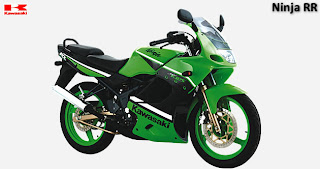
Kawasaki Ninja 150 RR is better than other bike, you know that kawasaki ninja 150 RR is fastest motorcycles in some country in Asia, this is because "Kawasaki Ninja 150 RR" is two stroke motorcycle, with great performance and beauty looks appears, Kawasaki ninja 150 RR still in the front line up of fastest motorcycles. If you never know about kawasaki ninja 150 rr, this bike is 150cc 2-stroke motorcycles, with one part that can make this bike running more fast !! that's super kips part on kawasaki ninja 150 rr engine.
Kawasaki Ninja 150 RR
I have one funny story about kawasaki ninja 150 RRowner,. He is my brother, He said that if you running on the small cc bike, when you ride it at 80 kmh, you can feel not comfortable, but if you running more than 100 kmh with kawasaki ninja 150 rr, you can't fell anything and still comfortable.. wow.. it's funny ha.. ha.. i can't imaging and feel running on the bike more that 110kmh ...

Wednesday, December 29, 2010

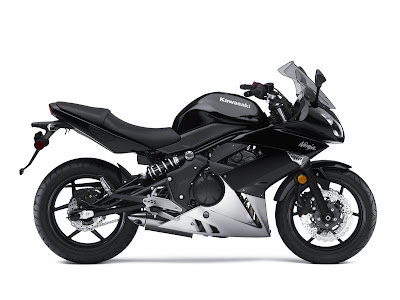
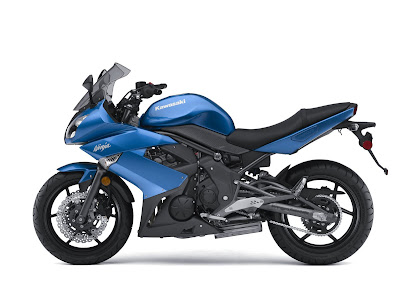
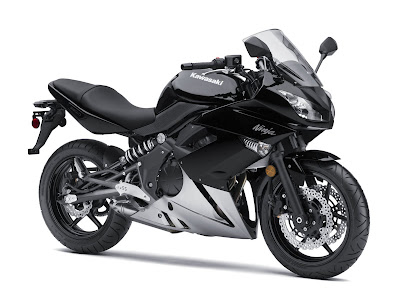
2010 Kawasaki Ninja 650R2010 Kawasaki Ninja 650R

kawasaki thaiand stylekawasaki KSR thailand modif pics 1
kawasaki KSR modificationkawasaki ksr modification
kawasaki ksr thailand
very unique and ancient looking, it is the first impression I got when I saw the picture of the kawasaki KSR-style modification with thailand. in thailand there was also a trend in the modification of motorcycle tires, the most visible modification is the tire of the kawasaki KSR is made very small. and I think it does not match the shape of the kawasaki KSR is similar to using a tire trail bike with such a small size. impression of the motor kawasaki KSR is very funny and silly.

Monday, December 27, 2010


modifikasi.jpg

Kawasaki Ninja - a radical modification of the neat and steady for oprasional.

"It looks expensive bgt, whereas if we'd be dibandingin more than Japan should modif motor, lots of crazy modif the price exceeds the price of Aprilia. but cuman doang models which all have the Aprilia Mito.Upside or down, gedhe tires, etc.. "- by Girifumi

Create crazy bro modif Girifumi assumption may be a bit much to make them mengerinyitkan forehead. But for most bikers, especially for bikers who think economically and bikers that prioritizing originality factor may very Girifumi bro assumption is correct.

Cost Factor

An example is the owner of Honda Tiger Revo (nyari safe mode-on), regardless of the cost of the average motorcycle owner modification goal was not far from the model SP NSR, Aprilia or Cagiva Mito. Even beyond the standard may modify them by replacing the light front leg into the foot upside down, the rear suspension to monshock to buy parts like fuel tank parts and the rear panel. Finally, after the modification with the cost of not less be a motor Tiger Revo is a bit like Aprilia, or SP with oddities here and there. The most severe is a radical modification of saving package style, intended to make cost savings, it is the waste and wasting time. Why? Many incidents where the motor modification costs became more expensive than the cost of buying a motor "original" that the goal of modification, is it even a strange hasilnyapun.

Originality factor

This is probably the most controversial paragraphs ever posted in INDOBIKERS. There is a question that is quite intriguing. Does the costume Barcelona numbered 14 you have to be Thierry Henry? Of course not, but certainly you have stated to anyone especially to people who see you that you are a fan or at least sympathizers of the former king of Arsenal. Bahakan if Thierry Henry "original" yes definitely saw you too will smile with you. But by installing fairing Yamaha R1 on the Tiger Revo you, and you happen to run into a real Yamaha R1 would certainly different situations. Maybe nothing happened seemingly anything but actually the driver will only R1 confusion with which you ride motorcycles, often bahakan who scorn it out in the mind of the driver R1 "authentic" is. Besides, whether by using R1 and the fairing you may be necessarily anggot club R1? Unfortunately it's not going to happen but certainly you will lose motor identity.

Creativity without borders

Modifying the motor is the development of creativity without boundaries. But the best pure goal is to modify the original idea, do not imitate or trace moge existing, let alone trace CBU motor sport that costs not much (about the same cost-red) than the price of your own bike. What is clear radical modification of the motor is generally less suitable for daily use. Because like any of the conditions most appropriate motor standarlah used for daily oprasional. If still want to modify the bike but with the condition should be used as a vehicle steadily oprasional daily, the best option is to make minor modifications. Changing tires, veld handlebar and the front or Menganti sockbreaker color and striping pattern into the most appropriate choice. Good luck!

Saturday, December 4, 2010


Updated chassis geometry features slightly steeper rake (0.5 degree) and 3mm less. The result is more weight on the front wheel.
It’s hard to imagine that nearly three decades have passed since the first Kawasaki Ninja sportbike was unleashed on the motorcycling public (1983 GPZ900R). That motorcycle helped usher in the generation of sportbikes we enjoy today. Now Team Green is at it again, evolving the technical aspects of high-performance motorcycles with the release of its 2011 Kawasaki Ninja ZX-10R. With the introduction of this Superbike, Kawi engineers have integrated a number of technologies that make it easier to ride than ever before. For the full technical briefing make sure to check out our 2011 Kawasaki Ninja ZX-10R First Look article. In this review we’ll focus on our riding impression and how it performs at the racetrack.

ELECTRONICS

Never in a million years did I think there would come a day that I’d say this, but, without question the most exciting feature of the new ZX-10R has nothing to do with the engine, chassis or anything else mechanical. It all comes down to a tiny black box and two sensors attached to each wheel. These are the primary components that make up the Sport-Kawasaki Traction Control (S-KTRC).

Videos Our Sponsor
2011 Kawasaki Ninja ZX-10R First Ride Video
Click to view video
Motorcycle USA takes to the track with Kawasaki's fully redesigned Ninja ZX10R in our 2011 Kawasaki Ninja ZX-10R First Ride Video.
The system is the most advanced traction control system we’ve ever used on a production motorcycle. It is designed to allow riders to get closer to the “limit” of the motorcycle’s performance by optimizing rear wheel spin and engine acceleration. Part of the reason the system works so well is because it is adaptive to riding conditions. Unlike other systems there are no pre-determined engine fuel or ignition maps. The system is constantly making calculations based on throttle position, engine acceleration, gear position (load force) and front and rear wheel speeds. This allows it to “predict” what might happen and adjust the engine’s ignition curve in real-time.

Four different modes are available based on rider preference or road conditions. Level 1 is designed for track use with racing tires. Level 2 is for general sport riding on either the street or racetrack, while Level 3 is for use in the wet or on slippery road surfaces. The system can also be disabled completely.

Each mode is selected by holding down a toggle button on the left clip-on for approximately one second. This can be done on the fly as long as the throttle is closed. The selected mode is then displayed on the LCD cockpit display. Furthermore the chosen mode selection is stored when the bike is turned off and on again.
 
The Kawasakis digital instrument panel offers a number of features and is now one of the best set-ups on the market.
The Ninja ZX-10R employs wheelie control that lets you to keep the throttle pinned to the stop when power wheelie out of a corner.
Stability at all speeds is a strong point of the new 10R.
The Ninja ZX-10R utilizes wheel speed sensors on each wheel to feed information to the traction control and engine management systems.
(Above) The Kawasaki’s digital instrument panel offers a number of features and is now one of the best set-ups on the market. (Center) The Ninja ZX-10R employs wheelie control that lets you to keep the throttle pinned to the stop when you power wheelie out of a corner. (Below) The Ninja ZX-10R utilizes wheel speed sensors on each wheel to feed information to the traction control and engine management systems.

Considering we’d never turned a wheel at Georgia’s Road Atlanta not to mention the chilly asphalt temperature, we began the test by riding the bike in Level 2 mode. With its sheer number of blind turns and rises Road Atlanta is a very tricky circuit to learn. Still within just a handful of laps it became immediately clear the benefits of the S-KTRC.

There are a number of dips and rises on the track where the bike will power wheelie in second, third and even fourth gear. The TC incorporates a wheelie control functionality that allows you to literally keep the throttle pinned as the front wheel lifts off the ground during a power wheelie. To my surprise, it actually took considerable seat time to get used to this feature as my brain is hard-wired to either: lift off the throttle, dab the rear brake, or tap the clutch lever to get the front wheel back on the pavement. But if you can turn-off your brain and put 100% faith in the electronics it’s simply incredible how well it works with it completely mitigating the chance of the bike looping out and instead putting the front wheel down in a smooth and very natural feeling manner. However, we did notice the system felt herky-jerky in Level 3 as the bike would wheelie then set down and repeat.

After I had put certain segments of the track together I started to get greedy with the throttle when standing the bike up off corners. The rear tire would still spin slightly but it would do so in such a way that you could feel the bike trying to maximize every bit of forward drive. It felt like it would spin, grip, spin, grip as opposed to just spinning excessively when we attempted the same maneuvers with S-KTRC disabled.

But the craziest thing is just how unobtrusive the system is, especially in Level 1. It works its magic so inconspicuously that it’s difficult to tell that it’s even working (there is a segmented bar graph-style TC activation meter on the dash that displays how active it is working but you need to take your eyes off the road to view it). As opposed to other TC systems employed on say the BMW and Ducati, the Kawi’s set-up is far less intrusive when activated and it doesn’t feel like it's restricting acceleration as much.

So will the TC system make the bike totally crash-proof? Not exactly. To test, I dialed in heavy throttle while transitioning from the edge to shoulder portion of the rear Bridgestone BT-003 race tire (learn more about this tire in the Bridgestone Battlax BT003 Tire Comparison) and one time the bike rear end snapped sideways and I popped out of the seat. The only thing that prevented me from crashing was basically luck.

If it doesn’t keep you from crashing what is it good for then? Think of it this way: The TC system takes off the “edge” of aggressive throttle input. It helps smoothen out the load you place on the rear tire during acceleration which in turn reduces wheel spin and maximizes acceleration off a corner. If you’re skilled enough you can certainly accomplish the same goal with your right wrist (Mat Mladin-style) but you’ll never be as consistent as the machine. Hands down this is the best feature of the new 10R and worth every penny of its $13,799 base MSRP.

ENGINE

The new Ninja ZX-10R uses a longer swingarm that stretches wheelbase to 56.1 inches.
The traction control system employed on the new 10R is the best system weve ever tested on a production motorcycle.
The new Ninja ZX-10R is a very easy motorcycle to ride around the racetrack.
Although the basic architecture of the engine, including its Inline-Four configuration, firing order and bore and stroke measurements are identical to the previous model year, many of the internal parts have been reworked. For more technical details refer to the 2011 Kawasaki Ninja ZX-10R First Look.

The previous generation Ninja certainly didn’t lack any top end engine performance with it pumping out in excess of 160 horsepower at the rear tire (see the 2010 Kawasaki ZX-10R Comparison Track article). Although Kawasaki claims maximum power output to have increased it felt comparable to the 2008-2010 Ninja. Kawasaki did note that in stock form the U.S. spec ZX-10Rs are fairly restricted. To prove this they had a “Power Up” bike with a racing exhaust and different ECU and it did feel considerably faster and comparable to BMW’s S1000RR rocket ship. What did feel different however is the way in which the engine generates thrust.

The top-end power hit of yesteryear is gone and the powerband feels flatter than before (good thing). Throttle response continues to be excellent and the engine is very usable and friendly to manipulate at all rpm. We did notice however that it doesn’t pull with the same voracity as you close in on redline with power flattening up slightly. But we did appreciate the soft manner in which the engine hits the rev limiter which felt almost identical to the Z1000 (see the 2010 Kawasaki Z1000 First Ride). The exhaust note continues to be very quiet but there is still a fair amount of air intake howl, much to our pleasure.

The 10R now incorporates an engine power mode selection system similar to Suzuki’s GSX-R line of sportbikes. Three power modes are available ranging from “F” (full power mode), “M” (variable middle power—allows 75% of max power with a less aggressive power curve. Furthermore full power can still be accessed based on the throttle angle rate of change) and “L” (low power—60% of maximum with an even milder power curve). Similar to the S-KTRC system the power mode can be adjusted on the fly (as long as the throttle is closed) by pressing up on the left-hand clip-on toggle button for approximately one second. The selected mode is then displayed right above the S-KTRC setting on the instrument panel with the setting being retained when the bike is restarted.

CHASSIS

Without having ridden both bikes back-to-back it was difficult to tell if the new 10R is any more agile than the old one. Turn-in did feel more predicable then we remembered however.
The ZX-10R employs a new horizontally-mounted Showa gas-charged shock absorber.
The cockpit layout and riding ergonomics are a big improvement over last years bike.
(Above) Without having ridden both bikes back-to-back it was difficult to tell if the new 10R is any more agile than the old one. Turn-in did feel more predictable then we remembered however. (Center) The ZX-10R employs a new horizontally-mounted Showa gas-charged shock absorber. (Below) The cockpit layout and riding ergonomics are a big improvement over last year’s bike.
One of the biggest complaints we had with the old bike was how top-heavy it felt. The new Ninja has shed 22 pounds of mass with it now weighing in at 437 pounds with a full 4.5-gallon fuel load. Even better though is how much better its center of gravity feels.
 
Without riding the bikes back-to-back it was difficult to discern if the new Ninja steers any easier than the old one. Still we wouldn’t exactly term it as “flickable” but it did seem to steer more predictably than before which felt like it could be attributed to its improved mass centralization more than anything. We did notice how much more stable the bike is at high speeds with it headshaking far less than we’ve experience in the past.

We were generally pleased with the performance of last year’s fork and the new Showa BPF continues to provide excellent performance. It does a terrific job of controlling chassis pitch during hard braking, which we experienced entering Road Atlanta’s Turn 10 where you slow down from an indicated speed of 186 mph down to second gear.

Speaking of braking the Ninja continues to offer a very powerful braking set-up. Outright stopping force is incredible and the brakes didn’t fade at all at our pace. Initial bite is rather low which helps make the brakes easier to use for a novice rider but gradually ramps up as lever force is increased. Additionally the Ninja now offers an anti-lock braking system available as a $1000 option. The system only adds six pounds to the weight of the motorcycle; however it cannot be disabled like say the system employed on the BMW S1000RR. The bikes we rode were not outfitted with the system so look for a review in the future.

Even more impressive than the fork perhaps was the new horizontally-mounted Showa shock absorber. Overall the rear end of the bike seemed to squat less during hard acceleration and there was a high-level of feel during cornering. When you combine that along with the fantastic grip from the Bridgestone BT-003 race tire and phenomenal performance of the traction control system, the package facilitates strong drives off corners. Damping force also remained consistent throughout our 20-minute riding sessions.

ERGONOMICS

Next to the performance of the traction control system the revised cockpit and riding ergonomics is another area where the new 10R shines. Part of the reason why it feels much less top heavy than before is the 0.7 inch reduction in seat height. The profile of the fuel tank is also vastly improved with it feeling much more compact than before. We also liked
The new Ninja ZX-10R is a very easy motorcycle to ride around the racetrack.
The traction control system employed on the new 10R is the best system we’ve ever tested on a production motorcycle.
the way it was shaped which allowed us to grip it better during hard braking. The clip-ons also seemed to have a more logical bend that should prove to be more accommodating on the street as well. The position of the footpegs is now adjustable, which is another big plus for both street and track riders. Generally the cockpit was well proportioned and wasn’t at all cramped for my above average six-foot-tall frame.

FINAL THOUGHTS

Although we weren’t blown away by the added performance of the engine or chassis as compared to last year’s bike the electronics package on the new 10R is out of this world. Not only does it make the bike easier and safer to ride it allows you to better explore the astronomically high-performance that a modern day Superbike serves up. And to think that you can get a taste of a similar type of traction control and engine management technology that MotoGP bikes were using just a few years ago for a list price of $13,799 is absolutely mind boggling. Kudos to Kawasaki for continuing to evolve the realm of sportbikes with its easy-to-use and gimmick-free traction control system.